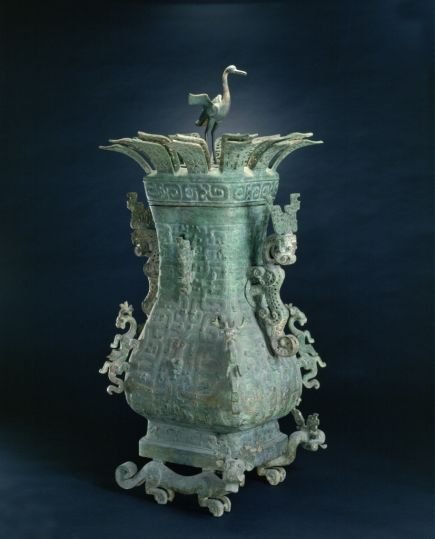
Lotus crane square pot
A crane takes off from the lid of a bronze vessel, and three centuries of rigid ritual art end.
Lotus crane square pot Read More »
A crane takes off from the lid of a bronze vessel, and three centuries of rigid ritual art end.
Lotus crane square pot Read More »
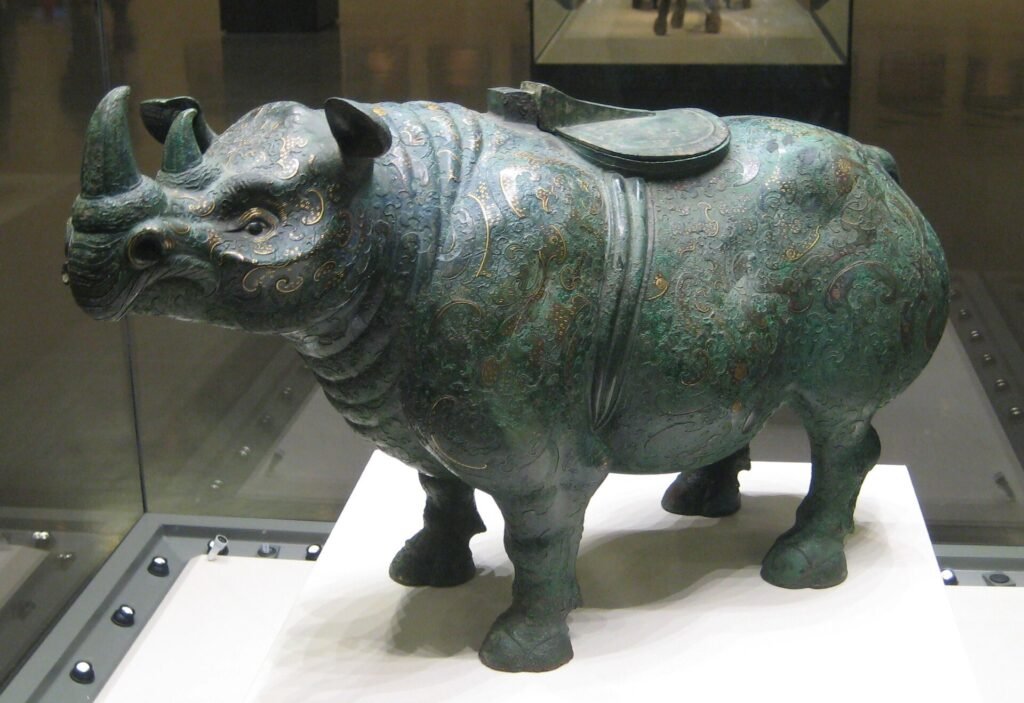
A rhinoceros stands with its head down and its hide worked in gold and silver cloud scrolls, a real animal turned into a wine vessel by people who had seen one. The Western Han cast this zun as a study from life: the body is heavy, the inlay is fine, and the whole thing reads
Bronze Rhinoceros Zun with Gold and Silver Inlay Read More »
A slender tripod cup on blade-thin legs, the oldest bronze vessel shape China has, and the moment drinking became a ritual instead of a reflex. The jue belongs to the Erlitou culture, the early Bronze Age society some identify with the Xia, and it shows casting at its first confident step: a spout, a tail,
Bronze Jue with Nipple Motifs Read More »
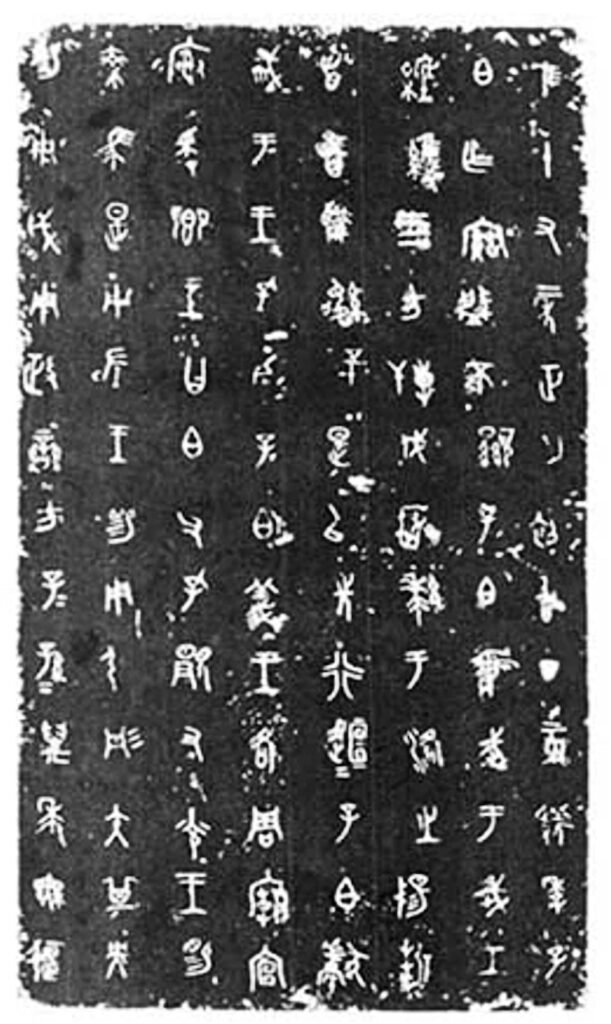
A bronze basin the length of a child, made to hold water at the ritual bath and to record a cavalry raid that went very well. Lord Bai of Guo had the victory cast into a 111-character inscription: he cut down five hundred foes and took their horses, and the Zhou king rewarded him for
Guo Ji Zi Bai Basin Read More »
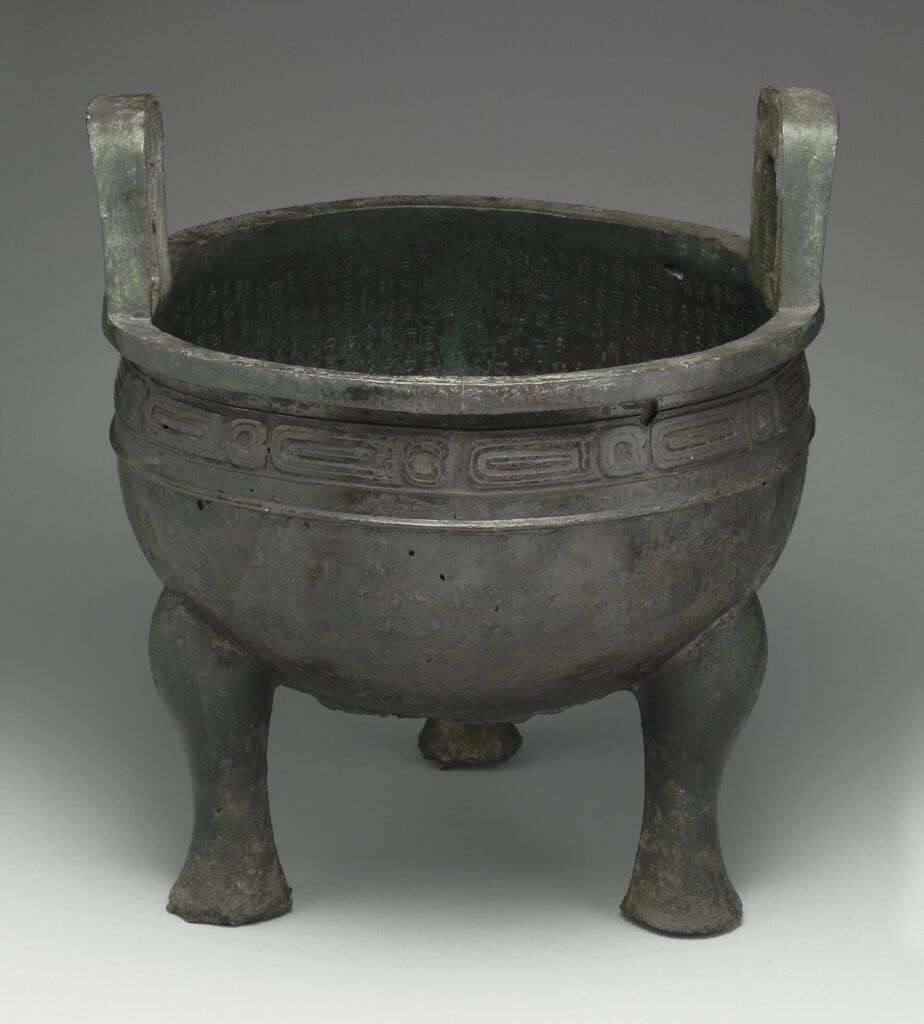
An unremarkable pot from the outside, and a 499-character letter from a king to his minister on the inside: the longest inscription ever found on a Chinese bronze. King Xuan of Zhou gave Maogong a charge and a vessel to remember it by, spelling out duties, warnings, and gifts in a single breath of archaic
Maogong Ding (Maogong Tripod) Read More »
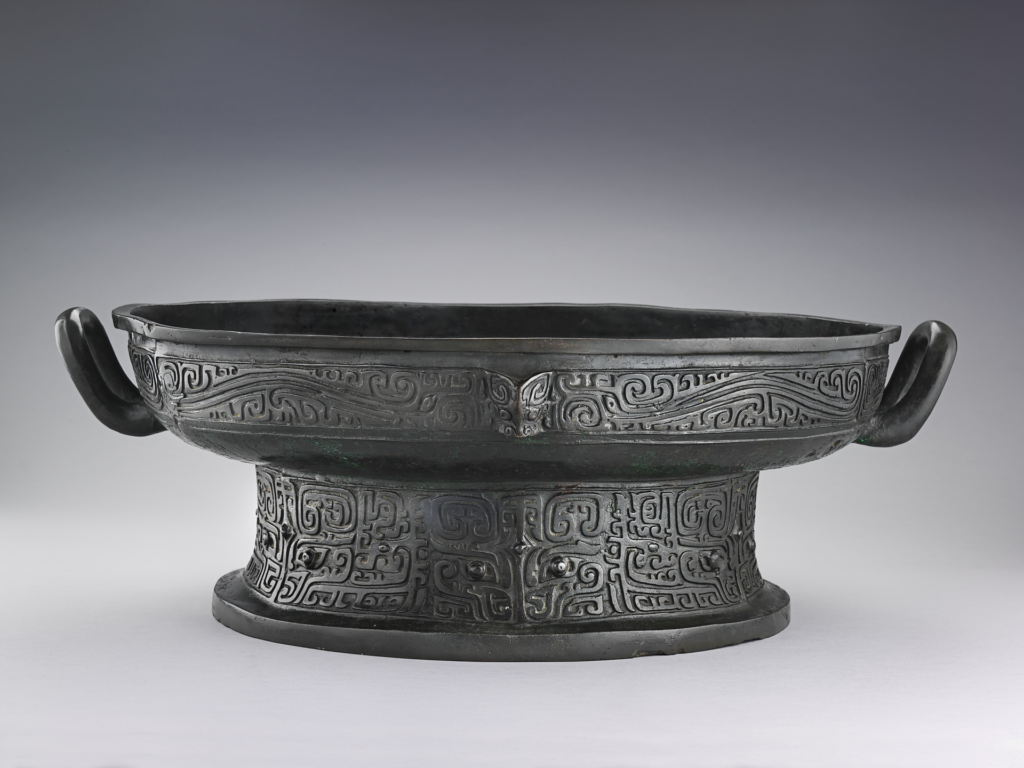
A bronze basin whose inside is covered with a contract: two states, a disputed border, and the witnesses who guaranteed the deal three thousand years before international law had a name. The San Family Plate records a land settlement between the states of San and Ji, inscribed in dense clerical script that scholars still decode
San Family Plate (San Shi Pan) Read More »

A cooking tripod whose handles are two rams’ heads and whose surface is crowded with small beasts, as if the Bronze Age wanted its utensils to bite back. The Boju li is named for an official, Boju, named in its long inscription, and dated to the early Western Zhou. It is the showpiece of the
Boju Ritual Tripod (Li) Read More »
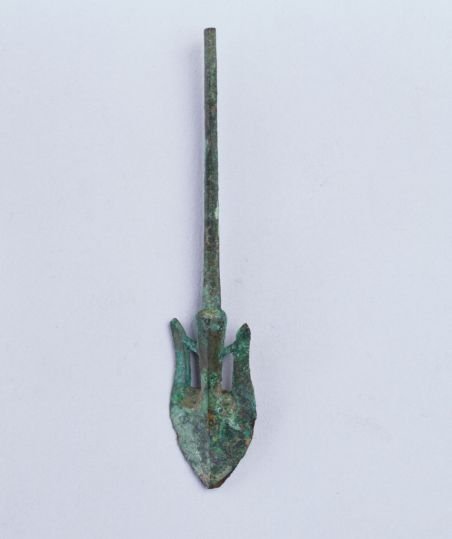
This object is bronze, the metal of Chinese ritual, cast in piece-moulds so the Imperial workshop could repeat a shape the ancestors would recognise. Bronz…
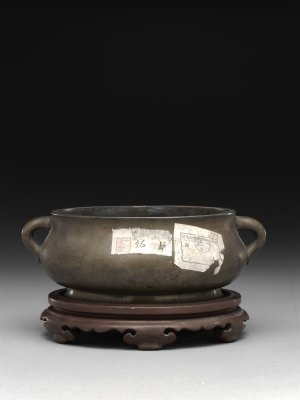
The object carries bronze, and bronze was never just a material. It was the medium of ceremony, its weight and ring part of the rite itself.
Bronze dragon ear ring foot stove Read More »
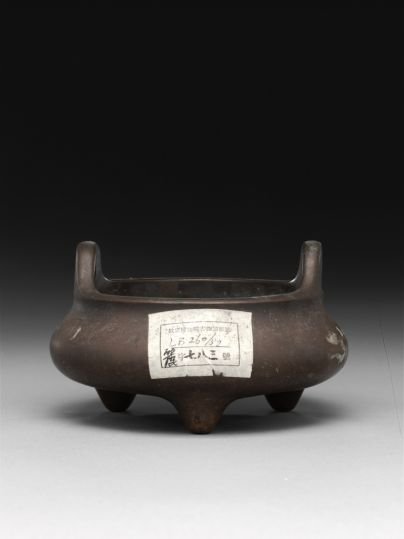
This object is bronze, the metal of Chinese ritual, cast in piece-moulds so the Imperial workshop could repeat a shape the ancestors would recognise. Bronz…
Copper ear, milk and foot stove Read More »