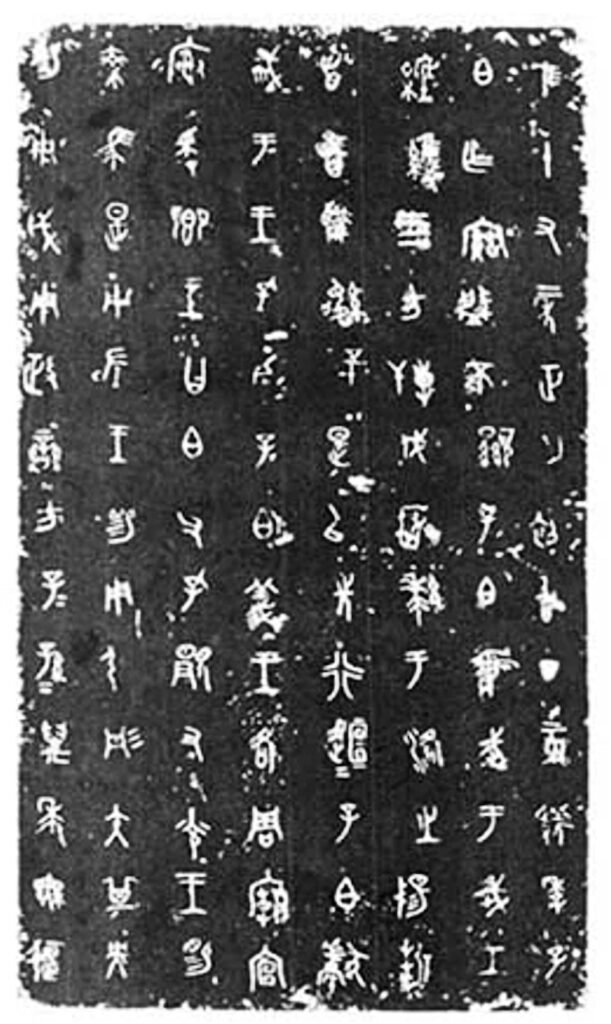
A bronze basin the length of a child, made to hold water at the ritual bath and to record a cavalry raid that went very well.
Lord Bai of Guo had the victory cast into a 111-character inscription: he cut down five hundred foes and took their horses, and the Zhou king rewarded him for it. The vessel is one of the largest bronze basins to survive, its shape borrowed from a washtub and its purpose borrowed from a monument.
It now sits in the National Museum of China in Beijing, a piece of early Zhou military history that doubles as the period’s most readable battlefield report.

Object details
| Name | Guo Ji Zi Bai Basin (虢季子白盘) |
|---|---|
| Artefact no. | — |
| Technique | Cast bronze |
| Period | Western Zhou dynasty (c. 9th c. BCE) |
| Collection | National Museum of China, Beijing |
| Source | 中国国家博物馆 |
Image © National Museum of China, Beijing. See the original in the museum collection.