
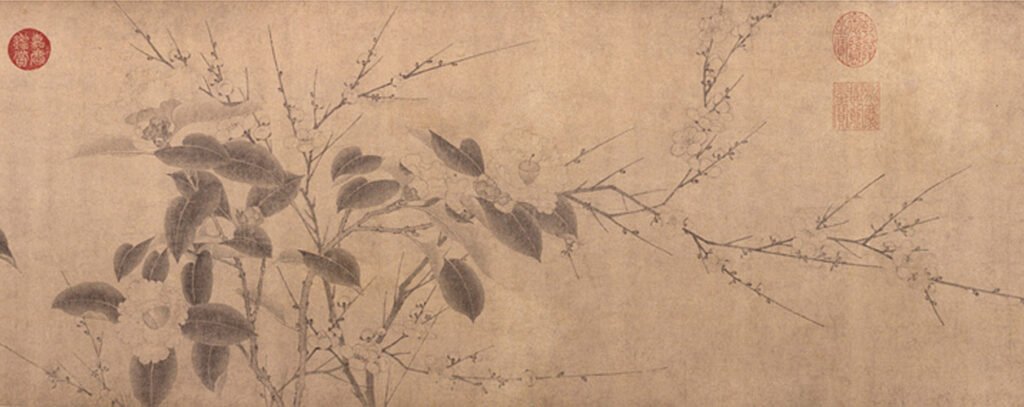
Someone in the Song dynasty walked a garden with a brush and set down one flower after another. The result is a handscroll now called One Hundred Flowers, and no name is attached to it.
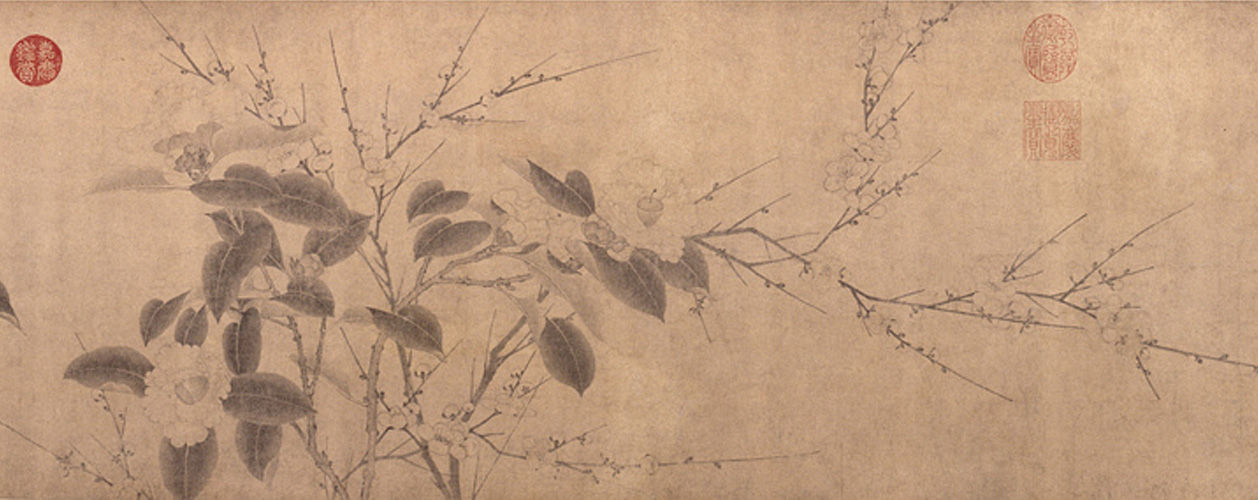
The painting is a long procession of blooms. Each is studied on its own terms, a peony, a lotus, a branch of plum, rendered in ink with the lightest colour. There is no figure, no story, no season in particular. The subject is simply the act of looking at flowers closely and recording what was seen.
Anonymity changes how we read it. We are not watching a master perform for posterity. We are watching a skilled hand simply pay attention, and that plainness is the achievement. The Song court prized this kind of naturalism as a serious discipline, not a minor one, and an unsigned scroll could still be the finest in the room.
The handscroll form suits the idea. You unroll it and keep meeting new flowers, an unhurried botanical walk measured in inches. The painter never announces a thesis. The flowers are the argument: that the world is worth this much care.
Eight hundred years on the blossoms are still open, and the hand that opened them stays politely, deliberately unknown.
Object details
| Name | One Hundred Flowers (百花图卷) |
|---|---|
| Artefact no. | 新00147486 |
| Category | Chinese Paintings (绘画) |
| Collection | The Palace Museum, Beijing |
| Source | Palace Museum Digital Collection (数字文物库) |
Image © The Palace Museum. View the original in the Palace Museum collection.