
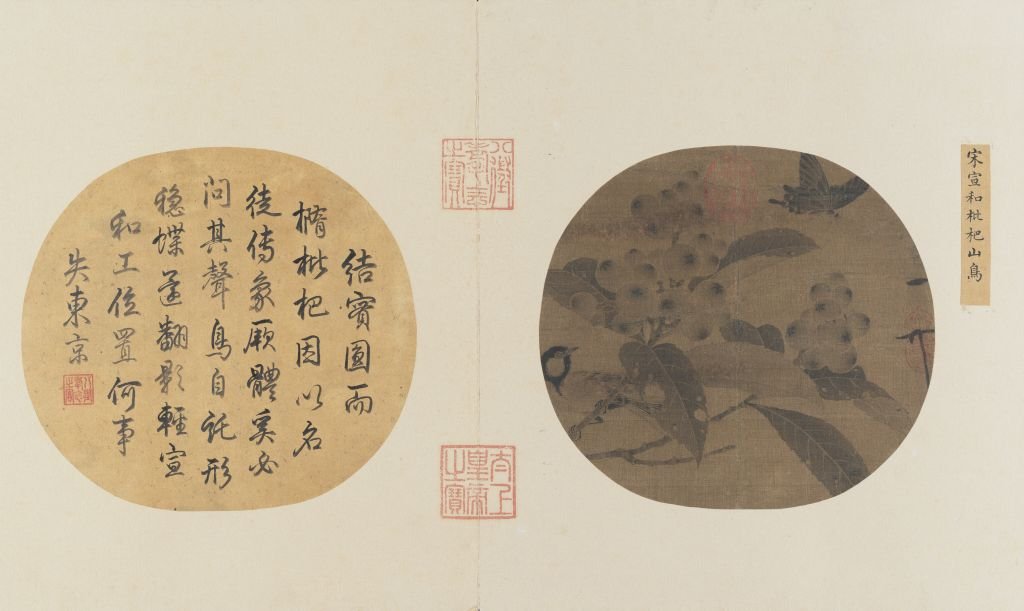
The most demanding art patron in Chinese history also painted small things with enormous care. A loquat branch with a single bird carries his manner, and the Palace Museum holds it.
The album leaf is tight and exact. A branch of loquat leans across the silk, fruit heavy on it, and a small mountain bird perches, watching. Everything is observed, the wax on the leaves, the weight of the bird on the twig. This is the Huizong standard, careful looking dressed in elegance, and it is why his name travels with paintings like this one.
Huizong ruled in the early twelfth century and turned the Song court into the greatest painting academy China had seen. He set examinations, graded submissions, and personally shaped a style of patient observation. The catastrophe came from elsewhere, but the eye he trained outlived the empire.
An album leaf was a private pleasure, a small wonder for one viewer at a time. This one fits the hand. The bird is still, the fruit is ripe, and the whole thing feels like a held breath of late spring.
Look at it long enough and you see the emperor’s real monument was not the throne. It was the way of seeing he made official.

Object details
| Name | Loquat and Mountain Bird (赵佶枇杷山鸟图页) |
|---|---|
| Artefact no. | 故00006150-2/10 |
| Category | Chinese Paintings (绘画) |
| Collection | The Palace Museum, Beijing |
| Source | Palace Museum Digital Collection (数字文物库) |
Image © The Palace Museum. View the original in the Palace Museum collection.