
This object is cut from green jade, the stone the Chinese court valued above every other because it could be worked but never rushed. Jade does not bend; the carver removes everything that is not the object.
The cut is the point. Jade carving rewards a sure hand and punishes a second thought, so the object reads as a single decision rather than a sequence of them.
The Ming court ran its porcelain and enamel workshops as instruments of state, and the reign mark on a piece named the emperor as much as the object.
A object like this was made to outlast its owner by centuries, and it has. The green jade still carries the chill it had when it left the Ming dynasty (1368-1644 CE) bench.
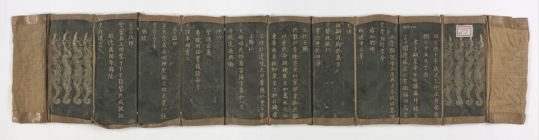
Object details
| Name | Qingyu Ming Xuanzong posthumous book (青玉明宣宗谥册) |
|---|---|
| Artefact no. | 故00167254 |
| Technique | Green jade (青玉) |
| Period | Ming dynasty (1368-1644 CE) |
| Collection | The Palace Museum, Beijing |
| Source | Palace Museum Digital Collection (数字文物库) |
Image © The Palace Museum. View the original in the Palace Museum Digital Collection.