
The mountain-shaped carving is a study in patience. Jade holds a polish no metal keeps, and the Jin workshop used that slow shine to signal rank and restraint at once.
A mountain-shaped carving in jade was never merely pretty. In a culture that called its rulers’ virtue ‘jade-like’, the stone was a standard as much as a material.
The Jin taste for jade favoured objects that could be held and turned, read in the palm as much as on the shelf. A mountain-shaped carving was a private argument about refinement.
Jade is the slowest possible reply to fashion. This mountain-shaped carving is Sinocra’s reason for keeping the craft in view, with more from The Palace Museum in the shop.
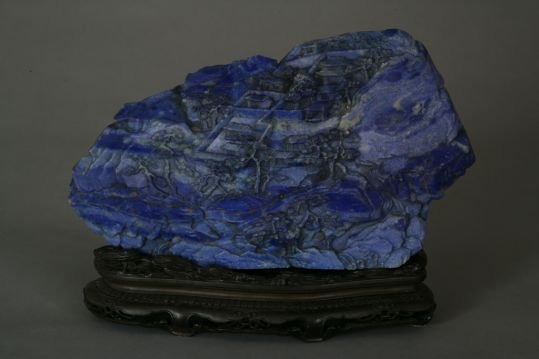
Object details
| Name | Lapis Lazuli Shanzi (青金石山子) |
|---|---|
| Artefact no. | 故00105408 |
| Technique | Jade |
| Period | Jin dynasty (1115-1234 CE) |
| Collection | The Palace Museum, Beijing |
| Source | Palace Museum Digital Collection (数字文物库) |
Image © The Palace Museum. View the original in the Palace Museum Digital Collection.