
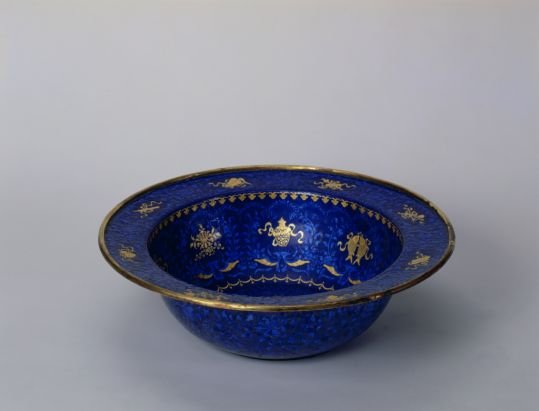
Translucent enamel is the quiet cousin of cloisonne. Instead of opaque cells, a thin coloured glass is laid over a chased and engraved metal ground, so the brightness of the metal shows through and the surface seems lit from behind.
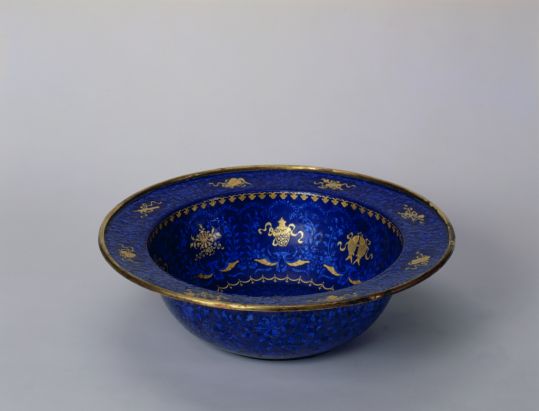
This basin carries the Eight Auspicious Symbols in that glowing technique, the symbols floating on a ground that is really the metal itself, polished to catch the light. The effect is lighter, almost jewelled, compared with the heavier cloisonne look.
A basin was a toilet or offering vessel, wide and shallow, a good shape for showing a technique that depends on a clean, reflective field. The Qing made translucent enamel a court speciality, subtler than its famous cousin.
Where cloisonne announces, translucent enamel hints. The same symbols, a different volume.
Object details
| Name | Translucent enamel basin with Eight Auspicious Symbols (透明珐琅八吉祥纹面盆) |
|---|---|
| Artefact no. | 故00118395 |
| Technique | Translucent enamel (透明珐琅) |
| Period | Qing dynasty, imperial workshop |
| Collection | The Palace Museum, Beijing |
| Source | Palace Museum Digital Collection (数字文物库) |
Image © The Palace Museum. View the original in the Palace Museum collection.