
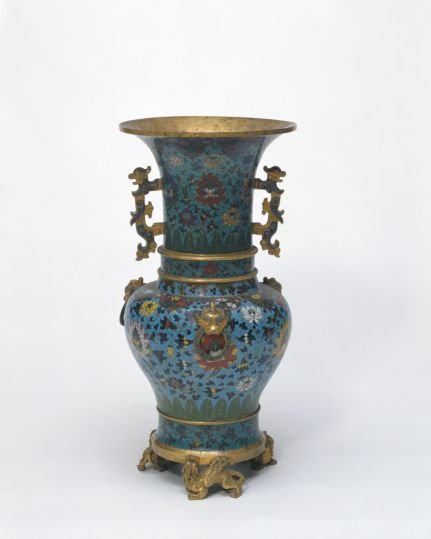
This zun takes its name from the Jingtai reign, and that matters. The Jingtai emperor ruled for only eight years in the mid fifteenth century, yet his reign gave cloisonne its Chinese name. Jingtai blue is not a factory. It is a standard of depth and finish that later workshops measured themselves against.
The vessel is a tall, swelling form with handles shaped like beasts, wrapped in an interlocking lotus scroll. Cloisonne builds colour from the inside out: wire first, then enamel, then fire, repeated until the surface is flush and the gilding catches the light.
A zun was a wine vessel in antiquity. Here it is a court ornament, a thing made to be seen rather than used, proof that the Ming could take a bronze archaeotype and surpass it in a foreign technique perfected on home soil.
Look at the blue. That particular depth is the reason a short reign still names a craft six centuries later.
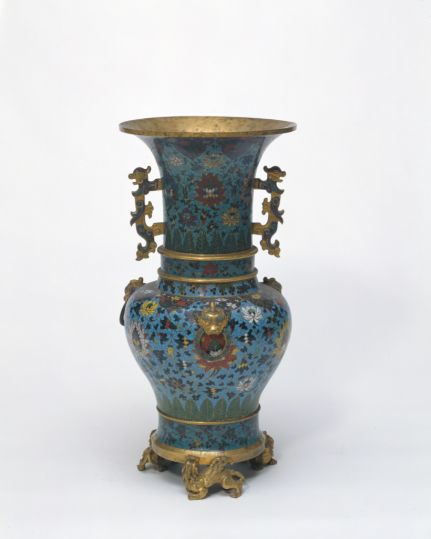
Object details
| Name | Jingtai-mark cloisonne ‘Interlocking Lotus’ zun with beast handles (景泰款掐丝珐琅缠枝莲纹兽耳三环尊) |
|---|---|
| Artefact no. | 故00117045 |
| Technique | Cloisonne enamel (掐丝珐琅) |
| Period | Ming dynasty, Jingtai reign (1450-1457) |
| Collection | The Palace Museum, Beijing |
| Source | Palace Museum Digital Collection (数字文物库) |
Image © The Palace Museum. View the original in the Palace Museum collection.