
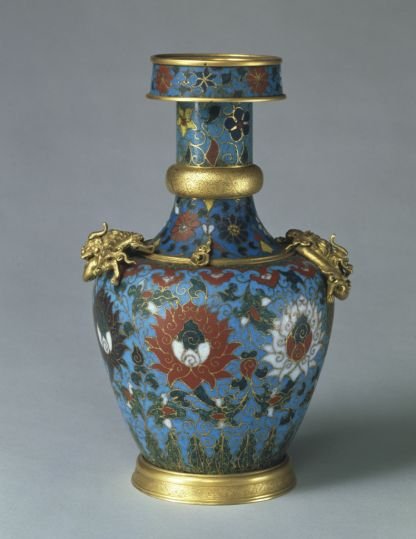
This slender vase is a changluo, used in Tibetan Buddhist ritual to hold offerings of water or grain. The Qing court, which styled itself protector of Tibetan Buddhism, had such vessels made in the Chinese cloisonne technique, a meeting of faiths in a single object.
The shape is distinct from the Han Chinese vase: tall, with a flared mouth and a restrained waist, dressed here in the familiar interlocking lotus. The technique is Beijing’s, the form is the plateau’s.
Qianlong especially commissioned objects like this, convinced that mastery of every tributary craft was part of imperial authority. A cloisonne Tibetan vase is that conviction made portable.
What looks like a pretty vessel is also a document of rule, a note that the court spoke more than one sacred language.
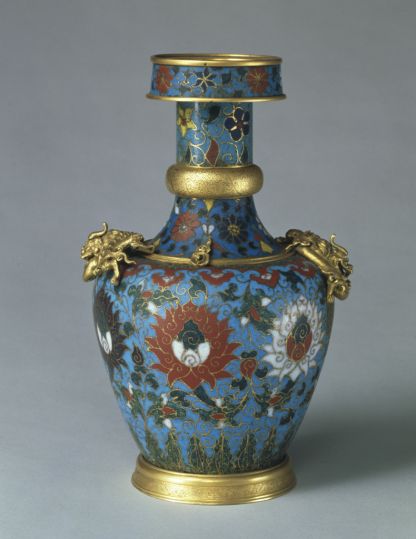
Object details
| Name | Cloisonne ‘Interlocking Lotus’ Tibetan-offerings vase (掐丝珐琅缠枝莲纹藏草瓶) |
|---|---|
| Artefact no. | 故00119581 |
| Technique | Cloisonne enamel (掐丝珐琅) |
| Period | Qing dynasty, imperial workshop |
| Collection | The Palace Museum, Beijing |
| Source | Palace Museum Digital Collection (数字文物库) |
Image © The Palace Museum. View the original in the Palace Museum collection.