
This ding (tripod cauldron) is bronze, the metal of Chinese ritual, cast in piece-moulds so the 崇祯 workshop could repeat a shape the ancestors would recognise. Bronze was read before it was touched.
The surface is the message. Bronze patterns, the taotie mask above all, were meant to be legible to the initiated and uncanny to everyone else.
The Ming court ran its porcelain and enamel workshops as instruments of state, and the reign mark on a piece named the emperor as much as the object.
A ding (tripod cauldron) like this survived because bronze does, and because someone thought the rite worth keeping. The bronze still rings, if you know how to listen.
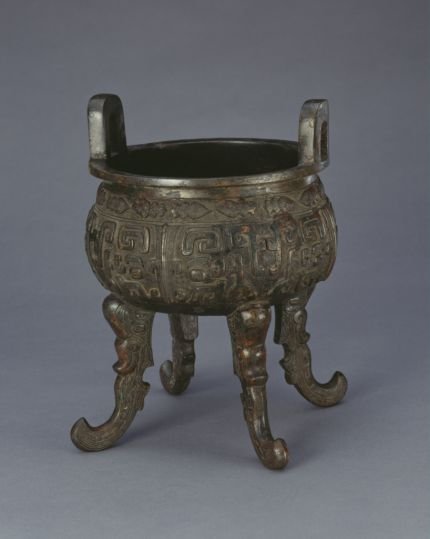
Object details
| Name | Bronze tripod made in Luguo in the 9th year of Chongzhen in the Ming Dynasty (大明崇祯玖年潞国制铜鼎) |
|---|---|
| Artefact no. | 故00077952 |
| Technique | Bronze |
| Period | Ming dynasty, 崇祯 reign (1628-1644) |
| Collection | The Palace Museum, Beijing |
| Source | Palace Museum Digital Collection (数字文物库) |
Image © The Palace Museum. View the original in the Palace Museum Digital Collection.