
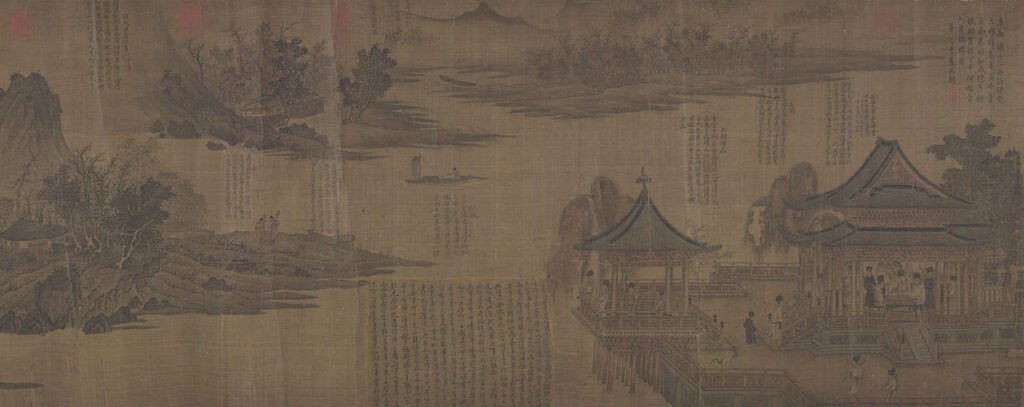
Zhang Xian was a poet first and a painter second, which is precisely why his scroll Ten Odes is interesting. It illustrates poetry with the restraint of a man who trusted words more than spectacle.
The handscroll takes ten odes by an elderly author and gives each a quiet image. Scholars, gardens, the small rites of a long life. Zhang Xian was a Northern Song literatus of real standing, and the work reads as a self portrait of a class, the educated retired official contemplating his years. The painting serves the text rather than competing with it.
That hierarchy is the point. By the Song, the ideal was that a picture should carry the spirit of a poem, not replace it. Zhang Xian’s illustrations are plain, almost diagrammatic in places, and that plainness is a choice. The viewer is meant to supply the feeling from the verse.
The scroll also shows how a literati career looked from the inside. The odes are about ageing, memory, and the consolations of study. To illustrate them was to stage one’s own settled life for an audience of peers. It is a soft, confident genre, the art of people who had arrived.
We remember Zhang Xian the poet. The painter in him left just enough to show what the poet valued.
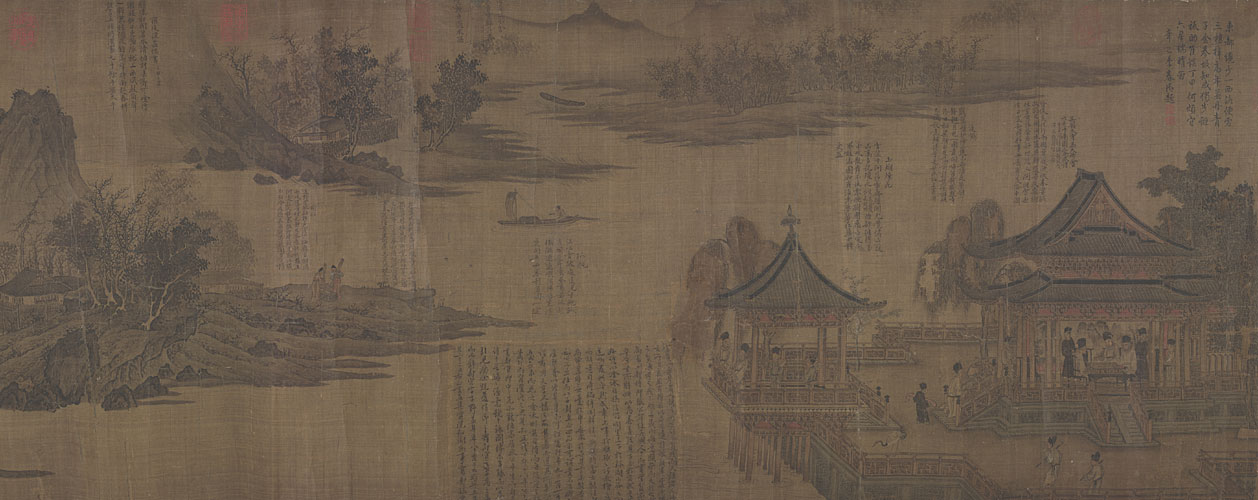
Object details
| Name | Ten Odes (张先十咏图卷) |
|---|---|
| Artefact no. | 新00202006 |
| Category | Chinese Paintings (绘画) |
| Period | 山水 |
| Collection | The Palace Museum, Beijing |
| Source | Palace Museum Digital Collection (数字文物库) |
Image © The Palace Museum. View the original in the Palace Museum collection.