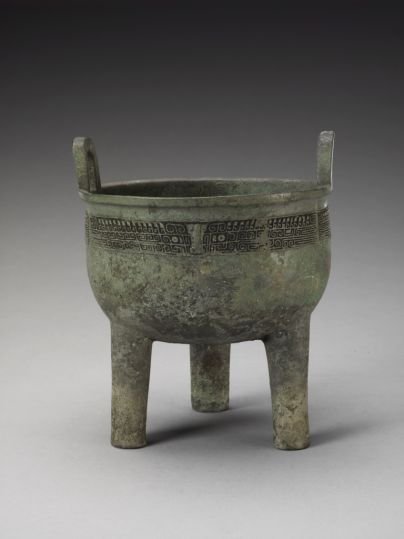
This ding (tripod cauldron) is bronze, the metal of Chinese ritual, cast in piece-moulds so the Imperial workshop could repeat a shape the ancestors would recognise. Bronze was read before it was touched.
The surface is the message. Bronze patterns, the taotie mask above all, were meant to be legible to the initiated and uncanny to everyone else.
Bronze was the voice of early Chinese ritual, vessels cast to hold grain and wine for the ancestors and for the state.
A ding (tripod cauldron) like this survived because bronze does, and because someone thought the rite worth keeping. The bronze still rings, if you know how to listen.
Object details
| Name | Bronze ding (tripod cauldron) (虎父乙鼎) |
|---|---|
| Artefact no. | 新00096684 |
| Technique | Bronze |
| Period | Imperial dynasty |
| Collection | The Palace Museum, Beijing |
| Source | Palace Museum Digital Collection (数字文物库) |
Image © The Palace Museum. View the original in the Palace Museum Digital Collection.