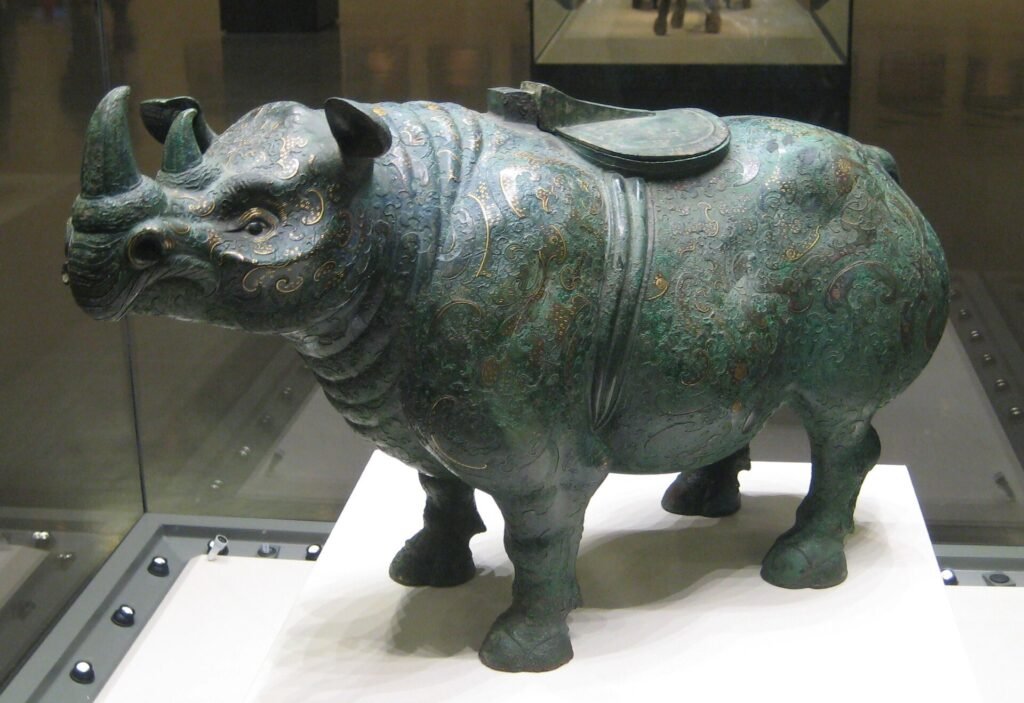
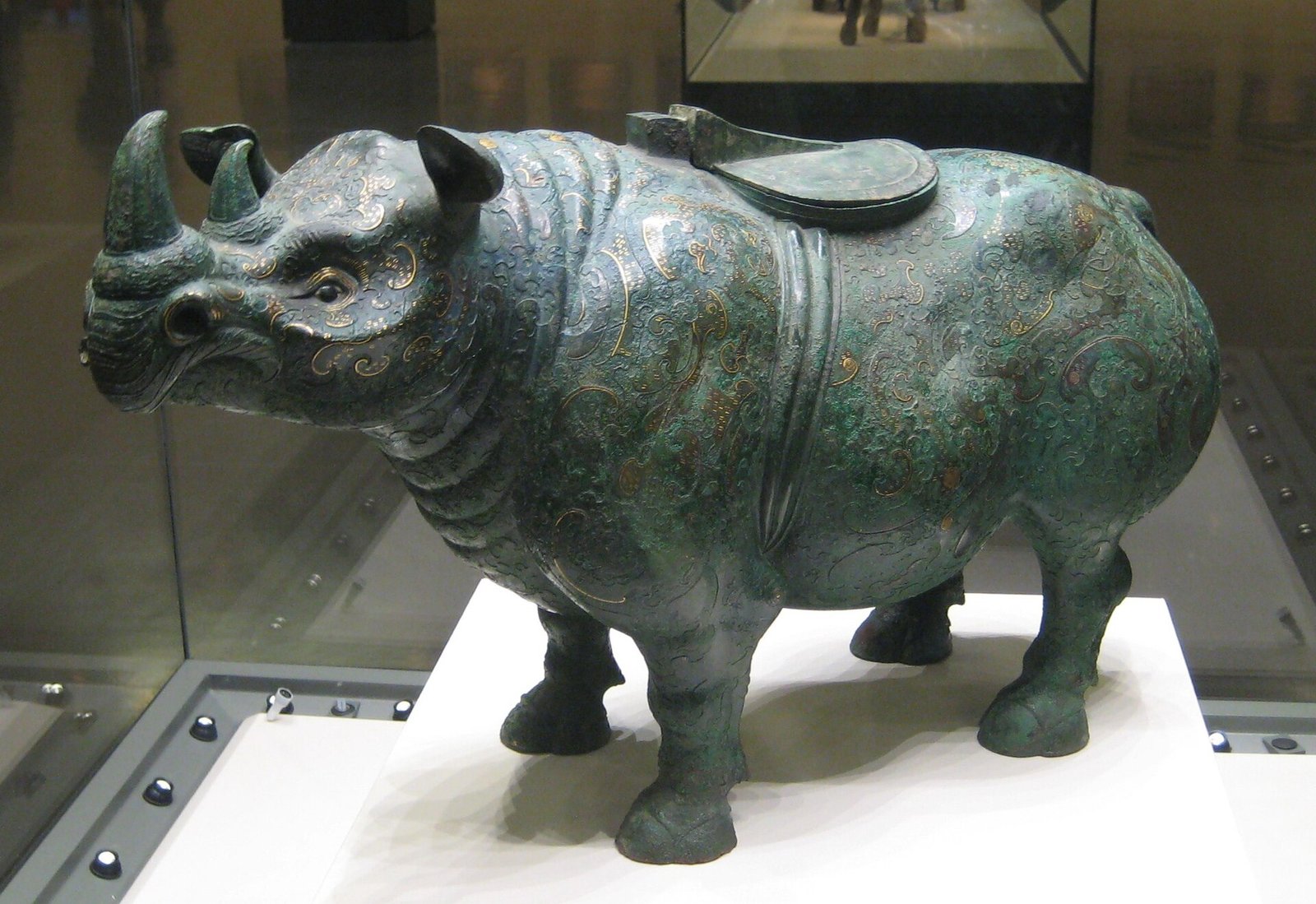
A rhinoceros stands with its head down and its hide worked in gold and silver cloud scrolls, a real animal turned into a wine vessel by people who had seen one.
The Western Han cast this zun as a study from life: the body is heavy, the inlay is fine, and the whole thing reads as affection rather than symbol. Rhinos still roamed the south of China then, and the object is a small record of a landscape since lost.
It is held in the National Museum of China and remains one of the most lifelike bronzes to survive from antiquity, proof that Chinese realism was old long before the academy gave it a name.
Object details
| Name | Bronze Rhinoceros Zun with Gold and Silver Inlay (错金银云纹铜犀尊) |
|---|---|
| Artefact no. | — |
| Technique | Cast bronze with gold-silver inlay |
| Period | Western Han dynasty (2nd-1st c. BCE) |
| Collection | National Museum of China, Beijing |
| Source | 中国国家博物馆 |
Image © National Museum of China, Beijing. See the original in the museum collection.