
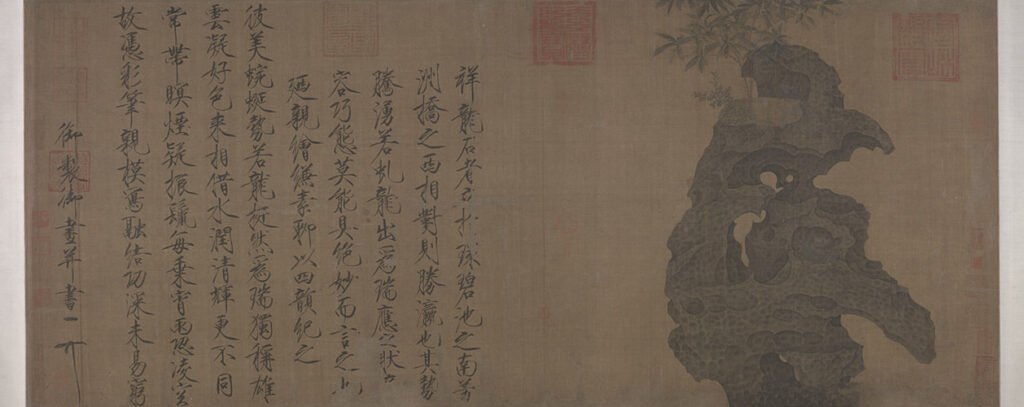
The most gifted artist to sit on a Chinese throne also lost the most. Emperor Huizong painted Auspicious Dragon Rock, and the rock he admired outlived his dynasty.
It is a single Taihu garden rock, the kind prized for looking like a storm frozen in stone. Huizong loved these rocks, collected them, and built a court around refined taste. Here he renders one with precise outlines and pale colour, then adds his own thin, taut calligraphy, the Slender Gold script he invented. The painting and the writing are the same hand, and both are unmistakable.
Huizong ruled in the early twelfth century and turned the Song court into the greatest art academy China had seen. He set painting examinations, graded submissions, and personally shaped a style of careful observation dressed in elegance. The catastrophe came from elsewhere. Within a few years of this rock’s portrait, the Jin armies took the capital and carried him north as a captive. He died in exile.
So the picture carries a strange weight. It is a study in control, every line deliberate, and it was made by a man who was about to lose everything. The rock, of course, did not care. It stands for the fortune he read as good and governed as if taste could substitute for strategy.
Look at the Slender Gold signature and you are looking at one of history’s finest handwriting. Look at the rock and you are looking at a man measuring his luck.
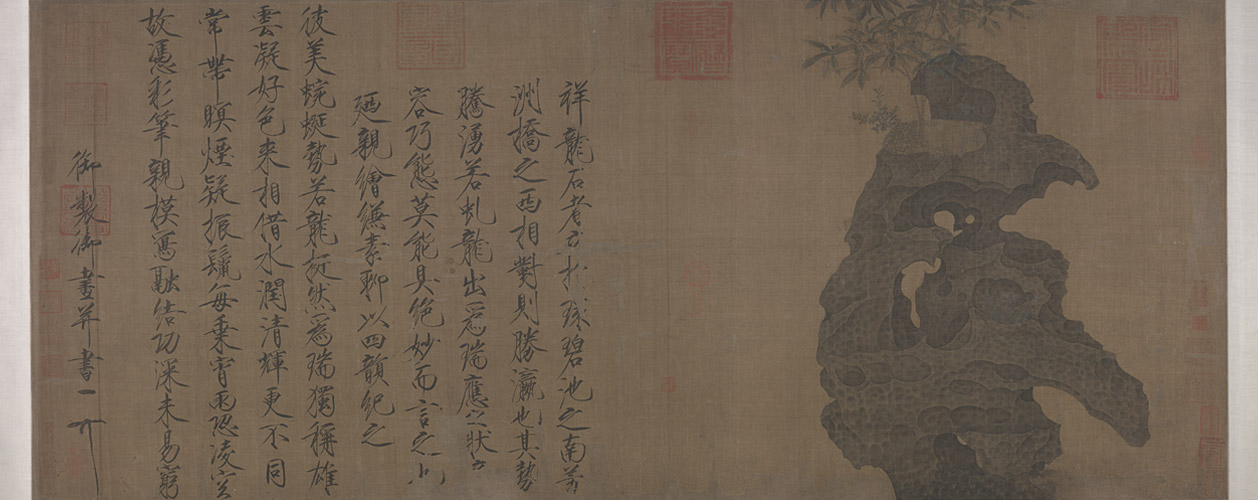
Object details
| Name | Auspicious Dragon Rock (赵佶祥龙石图卷) |
|---|---|
| Artefact no. | 新00147135 |
| Category | Chinese Paintings (绘画) |
| Period | 花鸟 |
| Collection | The Palace Museum, Beijing |
| Source | Palace Museum Digital Collection (数字文物库) |
Image © The Palace Museum. View the original in the Palace Museum collection.