In the intricate world of Chinese fine-art painting, few partnerships are as symbiotic or as productive as that of Wang Meifang and Zhao Guojing. Since they began collaborating in 1973, this husband-and-wife duo has carved out a distinctive niche, specializing in gongbi renwu (meticulous-style figure painting) that reinterprets classical traditions for a modern audience. Their joint oeuvre, celebrated in national exhibitions and housed in collections from the China National Art Museum to institutions overseas, represents a quiet but significant thread in the tapestry of contemporary Chinese contemporary Chinese art.
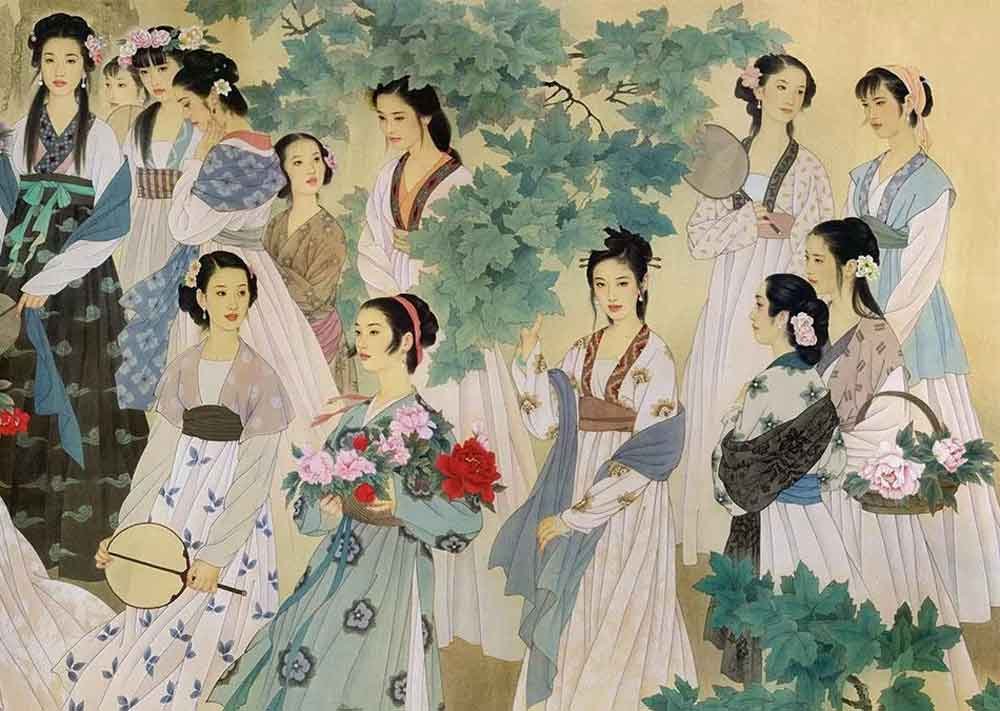
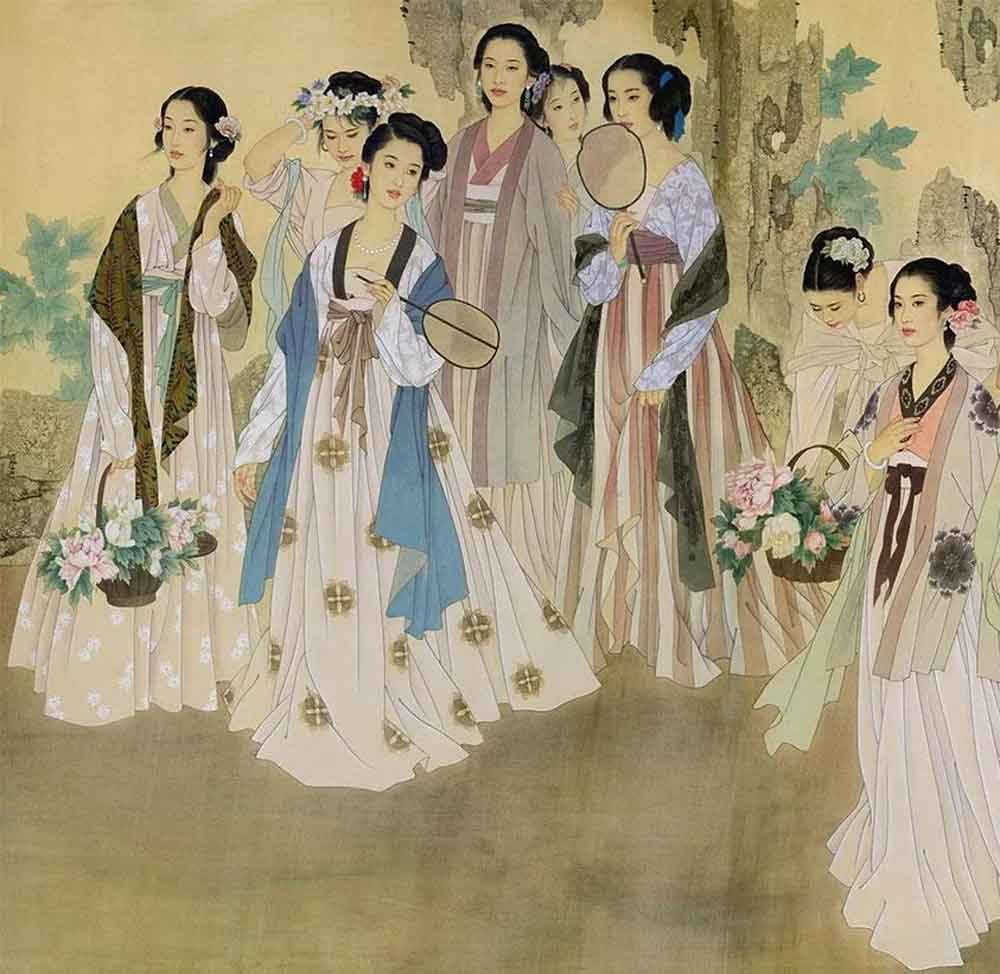
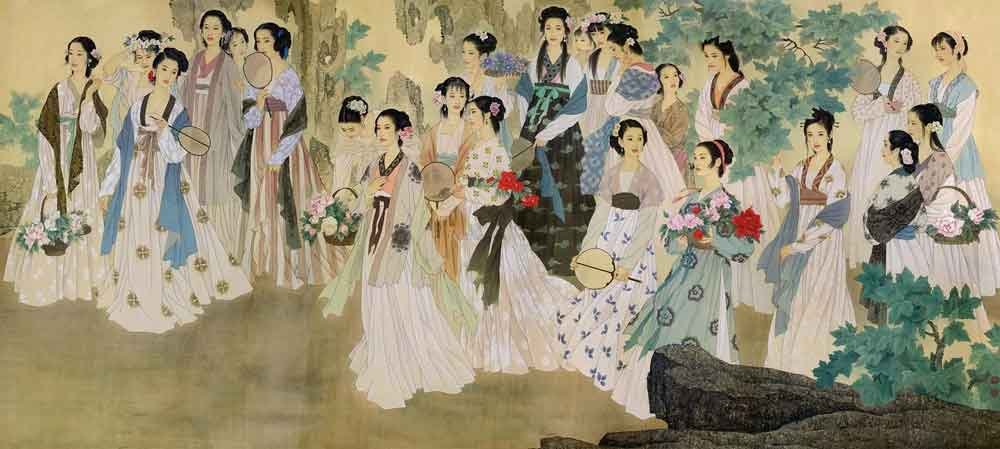
Their monumental work, “Flower Season,” is a testament to their perfected collaboration. Measuring an imposing 135.5 by 300 centimeters (nearlynearly 37 square feet), the piece is a culmination of their “new beauties” style, depicting 24 court ladies, each with distinct postures and attire.
The painting took over a year to complete and has been widely exhibited and published, eventually finding a permanent home in a museum in Taiwan. The scale alone commands attention, but it is the fusion of technical mastery and poetic sensibility that secures its importance.
The division of labour between the two artists is a key to their success. Mr. Zhao is credited with the overall composition and structure, crafting a scene that is both balanced and dynamic. Mrs. Wang, meanwhile, excels in the subtle rendering of details, particularly the delicate portrayal of faces and hands, which possess a just-right sense of volume and life. This synergy allows their work to operate on two levels: it presents a harmonious whole from a distance, while rewarding closer inspection with finely observed particulars. They primarily employ traditional Chinese techniques but demonstrate a pragmatic openness by subtly integrating methods from Western painting, a synthesis that avoids pastiche and instead enhances the depth of their artistic language.
In “Flower Season,” symbolic objects—pine trees, flowing skirts, round fans, and flower baskets—serve as vessels of classical allusion, inviting viewers into a contemplative, nostalgic space. The aesthetic is one of tranquil elegance—”silken skirts sway in the gentle breeze, fragrance pervades the air”—yet it avoids becoming sterile or overly sentimental. The tension in the drapery’s broad lines, the interplay of rich and muted colours, and the nuanced emotions conveyed through the ladies’ glances and poses collectively create what the artists’ advocates describe as an atmosphere of beauty and poetic charm.
Their work resonates because it navigates the modern dilemma of tradition effortlessly. It does not seek to radically deconstruct the past like some postmodern works, nor does it simply replicate it. Instead, they achieve a reinterpretation that feels both authentic and accessible. This aligns with a broader trend in contemporary art where the role of interpretation is increasingly recognised as a crucial skill, bridging the gap between the artwork and the audience. Wang and Zhao offer a painted world that is immediately recognisable as Chinese, yet its calm refinement and technical assurance give it a universal appeal.
While major global exhibitions in 2025 are showcasing everything from Wolfgang Tillmans’s photography in Paris to Shara Hughes’s intuitive paintings in Florida, the art of Wang Meifang and Zhao Guojing represents a different, yet equally vital, current. It is an art of synthesis and harmony, proving that deep roots in tradition, when tended by two skilled hands, can produce branches that bloom anew.