
The ruyi scepter is a study in patience. Green jade holds a polish no metal keeps, and the 乾隆 workshop used that slow shine to signal rank and restraint at once.
A ruyi scepter in green jade was never merely pretty. In a culture that called its rulers’ virtue ‘jade-like’, the stone was a standard as much as a material.
The Imperial taste for green jade favoured objects that could be held and turned, read in the palm as much as on the shelf. A ruyi scepter was a private argument about refinement.
Jade is the slowest possible reply to fashion. This ruyi scepter is Sinocra’s reason for keeping the craft in view, with more from The Palace Museum in the shop.
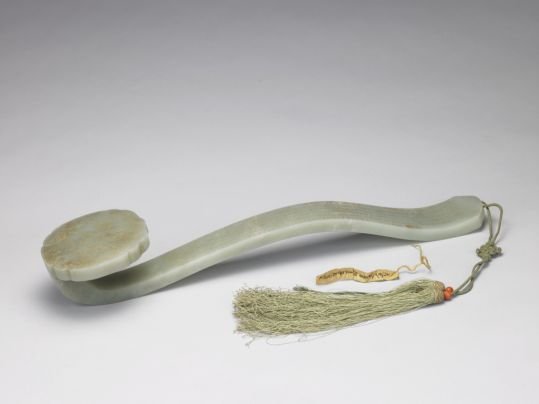
Object details
| Name | Sapphire carved orchid pavilion calligraphy written by Emperor Qianlong (青玉刻乾隆御笔兰亭帖如意) |
|---|---|
| Artefact no. | 故00099701 |
| Technique | Green jade (青玉) |
| Period | Imperial dynasty, 乾隆 reign (1736-1795) |
| Collection | The Palace Museum, Beijing |
| Source | Palace Museum Digital Collection (数字文物库) |
Image © The Palace Museum. View the original in the Palace Museum Digital Collection.